
On this page
- Describe one situation, the behavior you saw and its impact. Leave out judgments about the person.
- End with a next step and a question, so the employee helps shape the fix.
- Give it soon after the situation, in private, and often enough that it is not an event.
Here are examples of giving constructive feedback to employees in the situations managers meet most often: a missed deadline, repeated errors, a teammate who talks over others, someone who has taken on too much. Each example follows the same four-part formula, so you can adapt it to your own situation. For each one you get what to say, what to avoid and the question to ask once you have said it.
What constructive feedback is (and isn’t)
Constructive feedback describes a specific behavior and its effect on the work, then points to a step forward. It is about what someone did, not who they are.
The difference matters more than it seems. In a meta-analysis of over 600 effect sizes, Avraham Kluger and Angelo DeNisi found that feedback improved performance on average, yet more than a third of feedback interventions made performance worse. Feedback helped less as attention moved away from the task and toward the person’s self1. In practice: “You’re careless” pulls attention to the self. “The totals in Tuesday’s report didn’t match the source data” keeps it on the task.
A short example of constructive feedback:
“Your reports are sloppy.”
“In Tuesday’s report, the totals on page three didn’t match the source data, and the client noticed before we did. Can you add a check against the source before you send the next one?”
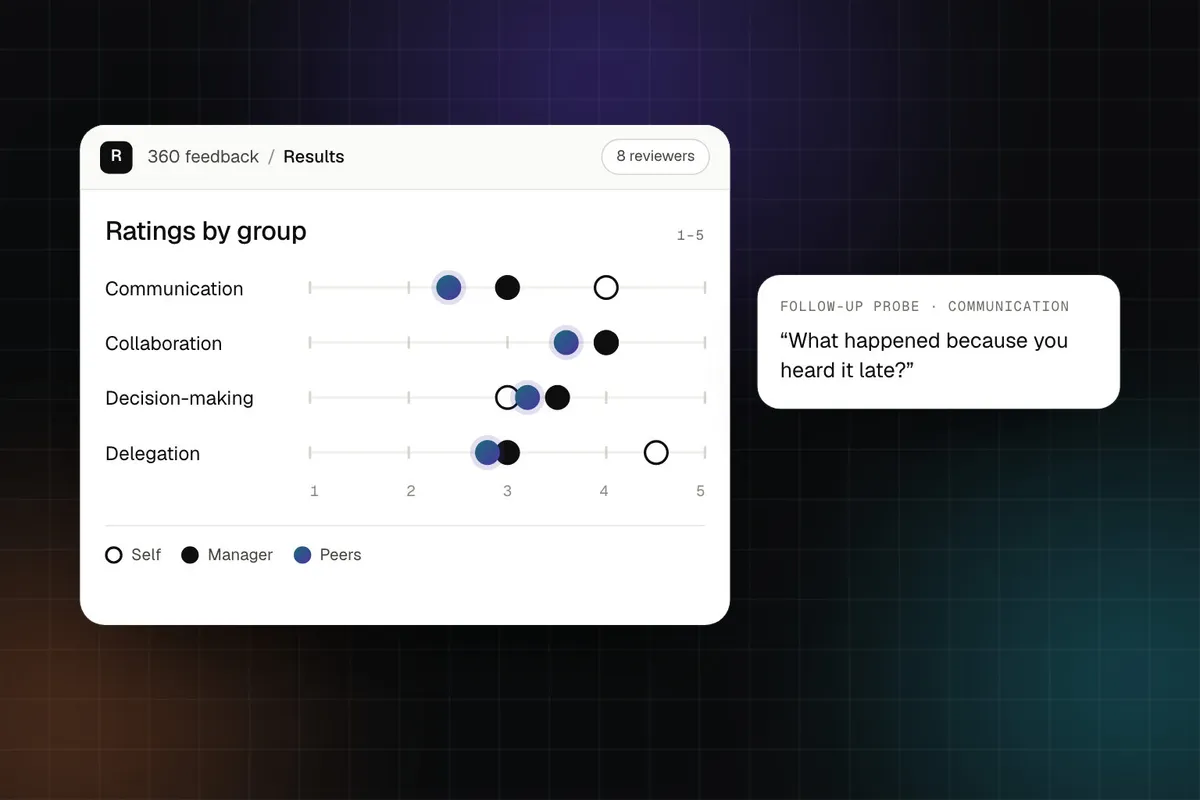
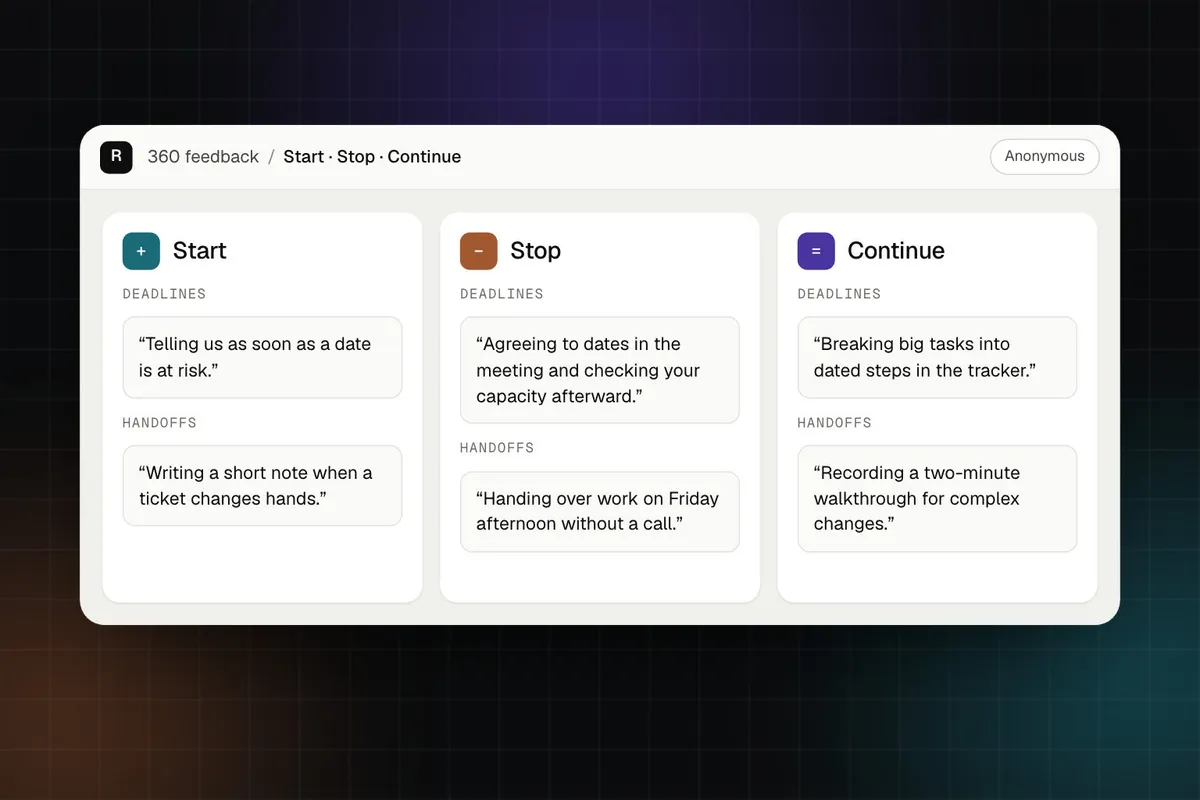
This article is about feedback you say to someone you manage. For the written kind colleagues leave each other in a 360, see these start, stop, continue comments for peers and managers.
A formula: situation, behavior, impact, next step
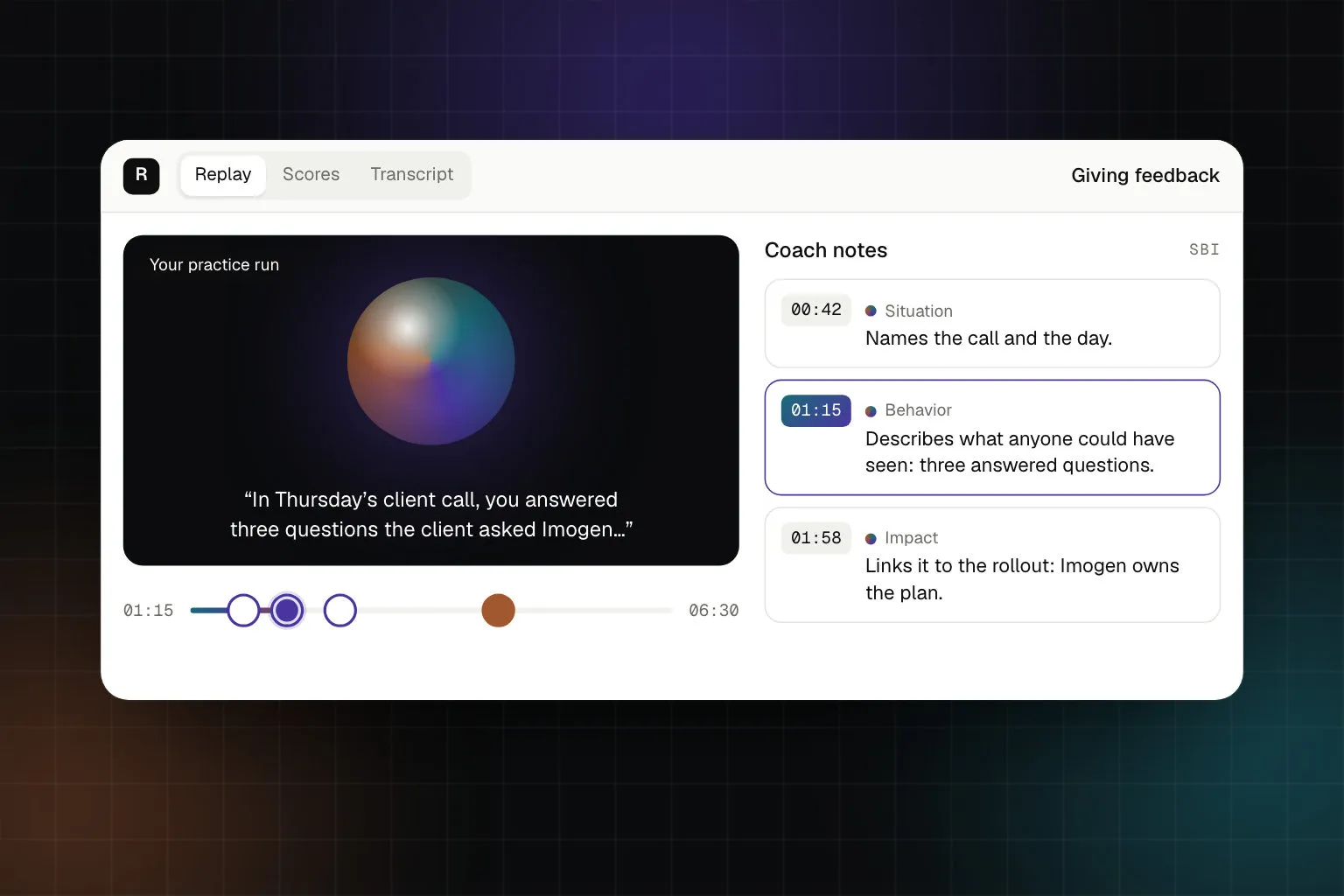
The Center for Creative Leadership (CCL) teaches a model called Situation-Behavior-Impact, or SBI. You name the situation, describe the behavior you observed and explain its impact. CCL’s research shows that SBI makes giving feedback less stressful and the person hearing it less defensive2. CCL also adds a step to ask about intent: “What were you hoping to accomplish?”
For everyday feedback, add a next step and finish with a question. The question turns a verdict into a conversation and often tells you something you didn’t know.
| Part | What it answers | Example |
|---|---|---|
| Situation | When and where? | “In Thursday’s client call…” |
| Behavior | What did they say or do that anyone could have seen? | “…you answered three questions the client asked Imogen…” |
| Impact | What changed because of it? | “…so they didn’t hear from the person who will run their rollout, and she owns the plan.” |
| Next step | What should happen next time, and what do they think? | “Next time, let her answer first. How did the call look from your side?” |
Constructive feedback examples by situation
These examples of constructive feedback are written as you would say them out loud, one-on-one. Swap in your own dates, names and numbers. If you can’t name a specific situation, wait until you can.
Missed deadlines
“You’re always late with everything.”
“The vendor comparison was due Friday and came in on Wednesday. The purchasing team had to push their decision by a week. Next time, can you tell me as soon as a date looks at risk?”
Then ask: “What got in the way this time?”
Repeated errors in work
“You need to be more careful.”
“In the last two invoices, the sales tax line used last year’s rate. Finance caught both, but one had already gone to the customer. Let’s add the rate to your checklist before the next batch.”
Then ask: “Where in the process do you think the mistake slips in?”
Talking over others in meetings
“You dominate every meeting.”
“In this morning’s design review, you finished Soren’s sentence twice and he stopped talking after that. We need his input on the data model. In the next review, can you hold your point until he’s done?”
Then ask: “Did you notice that? How did the meeting feel from your seat?”
Not sharing information with the team
“You keep everything to yourself.”
“You knew on Tuesday that the client had moved the launch, and the team found out on Thursday. Two people spent those two days on the old plan. When a client changes something, please post it in the team channel the same day.”
Then ask: “Is there anything that makes sharing updates harder than it should be?”
To practice saying it out loud first, run a feedback conversation about a missing file note that misled a colleague, with Omar · AI senior claims handler as the employee.
Late or missed commitments to colleagues
“People can’t rely on you.”
“You told Linnea you’d send the test data by Monday. She got it on Thursday, and her review slipped by three days. If a promise to a colleague is going to slip, tell them before the date, not after.”
Then ask: “How many requests from other teams are you juggling right now?”
Tone with customers or colleagues
Keep this about the words and actions, which both of you can point to, not about what you guess they felt.
“You come across as rude.”
“In your reply to the customer yesterday, you wrote ‘As I already explained twice.’ They forwarded it to their account manager and asked for someone else. Next time, restate the answer without the reminder that you’ve said it before.”
Then ask: “What was going on in that thread before you wrote it?”
Taking on too much
This is feedback about a behavior that looks like a strength. Name the cost, not the effort.
“You need to learn to say no.”
“This month you agreed to three extra requests from other teams, and the onboarding guide you own slipped twice. I’d rather you bring new requests to me first, so we decide together what moves.”
Then ask: “Which of the things on your plate would you drop first if you could?”
Resisting a new process
“You just don’t like change.”
“Since we moved to the new ticket system, your requests still come in by email. The support team can’t track them, and two got lost last week. I need everything in the system from Monday. If something in it doesn’t work for you, tell me what.”
Then ask: “What would make the new process easier for you to use?”
A strong performer who could do more
Good performers need constructive feedback too. Without it, they stop growing and often notice.
“Keep doing what you’re doing.”
“Your analysis for the pricing project was the strongest on the team. Right now only I see it before the leadership meeting. Next quarter, I’d like you to present it yourself.”
Then ask: “What would you need from me to be ready for that?”
Feedback to a colleague
Giving constructive feedback to colleagues works the same way, with one difference: you have no authority, so ask before you give it, and make the next step a request.
“Everyone thinks your handoffs are a mess.”
“Can I give you some feedback on the handoff notes? On the last two projects, they didn’t list the open client questions, and I found out about them from the client. Could you add a short ‘open items’ section?”
Then ask: “Is there anything in my notes to you that would help if I changed it?”
Positive feedback examples
Positive feedback follows the same formula. “Great job” is pleasant and forgotten by lunch. Specific praise tells the person exactly what to repeat. Here are five examples of positive feedback.
- Preparation. “Before Wednesday’s client call, you sent the client the three open questions in advance. They came with answers, and we closed the scope in one meeting instead of two.”
- Helping a teammate. “You spent an hour with Ansel walking through the reporting tool last week. He shipped his first dashboard on Friday without help. Thank you for that.”
- Raising a risk early. “You flagged the server cost issue in the first week of the sprint. That gave us time to change the plan before the budget review.”
- Handling a hard customer. “On yesterday’s escalation, you summarized the customer’s complaint back to them before offering a fix. They signed off on the solution on the same call.”
- Improvement after feedback. “Last month we talked about missed handoffs. Your notes for the last three projects had every open item listed. That made my week easier.”
Giving feedback as a new manager
The hardest feedback a new manager gives is often to someone who was a peer last month. The old relationship pulls you toward hints and jokes. The formula still works: be specific, and say the change out loud once.
“Hey, no big deal, but maybe the reports could be a bit earlier? Just saying.”
“This is the first time I’m giving you feedback as your manager, and it feels a bit strange to me too. The weekly report has come in after the Monday meeting three weeks in a row. I need it by Friday afternoon.”
Two more situations new managers meet early:
- A former peer who goes around you. “Last week you took the budget question straight to Delia instead of to me. I want to stay close to you on decisions like this. Next time, bring it to me first, and if I can’t help, we’ll go to her together.”
- A friend on the team who misses standards. “We’ve worked together for a long time, so I want to be straight with you. The code you merged on Thursday had no tests, and the build broke for the whole team. Our standard is tests on every merge. What do you need to get there?”
You can practice these before the first real one. On The Reflection, Finn · AI former peer opens with “So you’re my manager now. Do I still get a say in how we run the migration?” and pushes back if your answer is vague. You can practice feedback conversations as a new manager as many times as you need.
What not to say when giving feedback
Some phrases undo good feedback even when the rest is right.
- Labels. “Lazy,” “negative,” “not a team player.” A label invites a debate about character. Describe the behavior that made you think of the label instead.
- “Always” and “never.” One counterexample is enough to dismiss the whole message. Name the specific times.
- Comparisons with others. “Why can’t you be more like Rowan?” makes the conversation about Rowan and leaves resentment on the team.
- Feedback through third parties. “Some people have mentioned…” can’t be answered or checked. If you didn’t see it, find out more before you raise it, or ask the person who saw it to give the feedback directly.
- “Don’t take this personally.” It signals that something personal is coming. If the feedback is about behavior, you don’t need the warning.
For the harder conversations, such as repeated underperformance, see a step-by-step structure for the harder talks.
When and how often to give feedback
Give feedback soon after the situation, while both of you remember it. Give it in private unless it is praise the person is happy to hear in front of others. And give it often, so a single conversation doesn’t carry the weight of a whole year.
Frequency pays off. Gallup found that 80% of employees who say they have received meaningful feedback in the past week are fully engaged. Yet in a study of nearly 15,000 employees, only 16% said their last conversation with their manager was extremely meaningful3.
Most people also want corrective feedback when it is given well. In a Zenger Folkman survey, 94% of feedback recipients said corrective feedback improves their performance when it is presented well. Most leaders were twice as likely to give positive feedback as corrective4. Treat these numbers as a signal, not a measurement: the 2,700 respondents chose to answer an online survey linked from a Harvard Business Review blog post in 2014.
Everyday feedback also makes the formal review easier. When it comes, nothing in it should be a surprise, and you can write it up with review comments built on the same formula. If your managers struggle with that conversation too, see how teams practice feedback in the annual review.
Practice before the real conversation
Reading examples of constructive feedback helps you find the words. Saying them out loud to someone who reacts is different. Most managers do that for the first time with a real employee.
You can rehearse a hard feedback conversation with an AI character by voice or video on The Reflection. The AI character pushes back the way an employee might. After each run, the manager gets a score per skill, based on what they said: whether they described specific behavior, explained the impact and agreed on a next step. Emotional states belong only to the AI character, as part of the scenario. The manager is scored on the content of their replies.
The feedback new managers put off most is the small, early kind: a report that is a little late, a remark in a meeting that lands badly. It feels too minor to raise, so they wait. By the time they speak, it is a pattern and a much harder conversation, and they soften it until nothing is left. We used to open with “It’s probably nothing, but…” and stopped: it tells the person they can ignore what comes next. Now we name the situation and ask what happened. Managers who rehearse that opening a few times walk into the real conversation calmer, and it gets shorter. Try it with the small thing you have been saving up.
Questions managers ask about constructive feedback
What are the three C’s of constructive feedback?
There is no single standard. Different authors and trainers use different sets of three C’s, such as clear, concise, consistent or caring, so treat any list as a memory aid rather than a rule. The formula above covers what most of them aim for: be specific, connect the behavior to its impact and end with a next step.
Does the feedback sandwich work?
Usually not for anything important. When praise always surrounds criticism, people learn to wait for the middle and stop trusting the praise. Give positive and constructive feedback separately, each on its own merits. For a fuller approach to the hard ones, see the guide to difficult conversations linked above.
Should constructive feedback be given in writing?
Say it first, then follow up in writing if the issue is significant or recurring. A short note with the situation, the agreed next step and a date to check in avoids a different memory of the conversation a month later.
How often should managers give constructive feedback?
As often as there is something specific to say. A short comment the same week works better than a long list saved for a monthly one-on-one.
Sources
- Avraham N. Kluger and Angelo DeNisi. The Effects of Feedback Interventions on Performance: A Historical Review, a Meta-Analysis, and a Preliminary Feedback Intervention Theory. Psychological Bulletin, 119(2), 254–284, 1996.
- Center for Creative Leadership. Use Situation-Behavior-Impact (SBI)™ To Understand Intent.
- Gallup. A Great Manager’s Most Important Habit. May 29, 2023, updated February 16, 2026.
- Jack Zenger and Joe Folkman. Feedback: The Powerful Paradox. Zenger Folkman, 2019.