
On this page
- Write one behavior per line, with the situation and its impact, so the person knows exactly what to start, stop or keep doing.
- Write about what you can see from where you sit: a peer sees collaboration, a direct report sees how they are managed, a manager sees the work.
- Take one or two points from Start and Stop into the development plan, and agree on how and when they will be practiced.
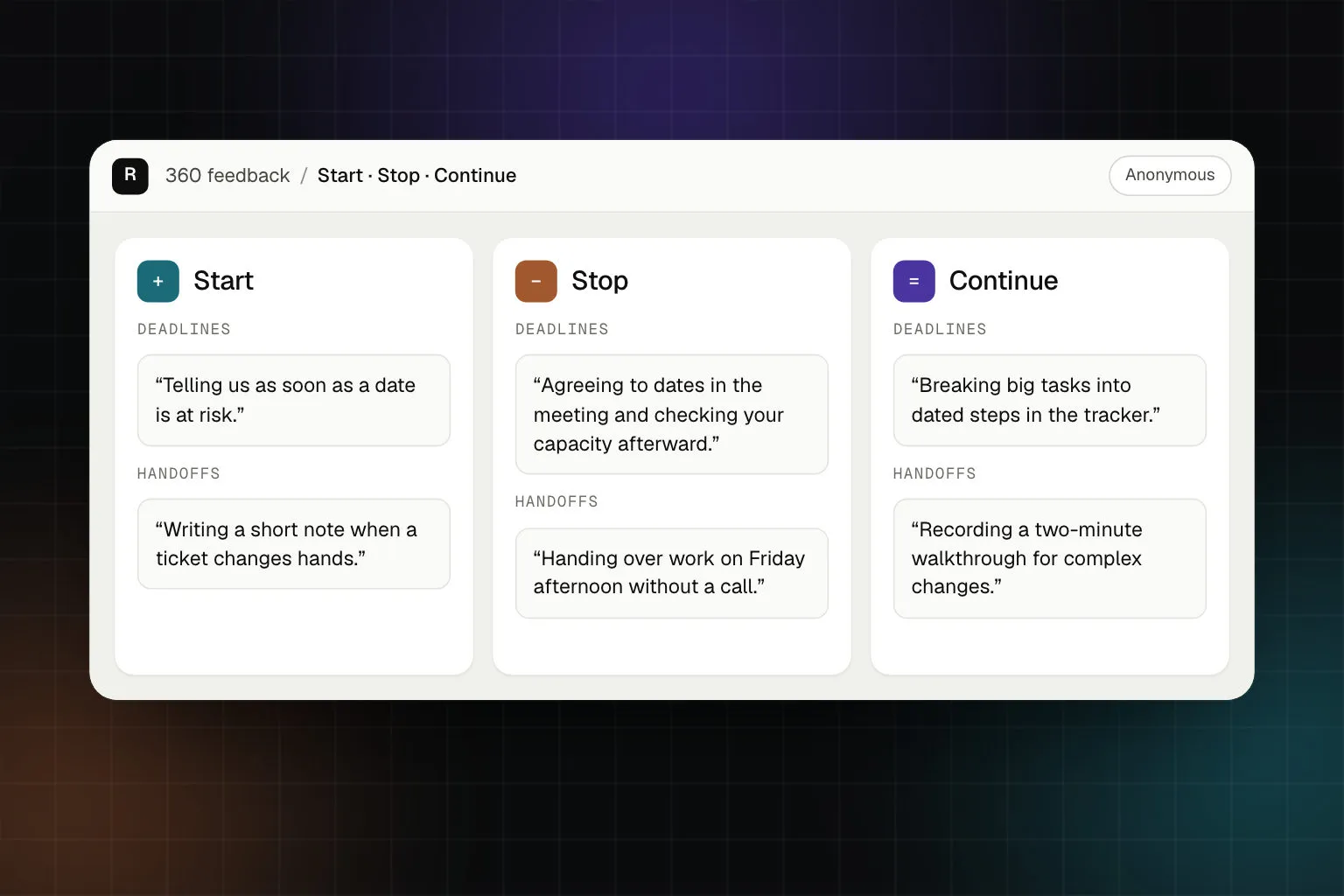
A 360 form with three boxes, start, stop and continue, looks easy until you have to fill it in for a colleague you like, a manager you depend on or someone on your own team. Below are start, stop, continue examples for 360 feedback, sorted by who is writing: a peer, a direct report writing about their manager, and a manager writing about their team member. Each one names a situation, so the person reading it can act on it.
All examples are samples. Use them as patterns and replace the situation with one you actually saw.
What is the start-stop-continue framework?
Start-stop-continue asks three questions about a person, a team or a process:
- Start: what should they begin doing that they don’t do now?
- Stop: what gets in the way and should be dropped?
- Continue: what works and should be kept?
In a 360 review, the three questions usually sit next to the ratings as open comment fields, answered by peers, direct reports, the manager and the person themselves. In a team retrospective, the same questions are asked about how the team works, not about one person. If you are building the form rather than filling it in, start with which questions to put in the survey.
The boxes push the writer toward suggestions rather than verdicts, and there is some evidence that this produces better comments. Alice Hoon, Emily Oliver, Kasia Szpakowska and Philip Newton analyzed written feedback from students on programs at three UK universities. Feedback collected with a stop / start / continue form had greater depth than feedback written as free text. When one university switched from free text to the structured form, the same pattern held, and students said they preferred the new form1.
The study looked at students commenting on their courses, not colleagues commenting on each other, so read it as a useful signal rather than proof for 360 reviews.
How to write start, stop, continue feedback
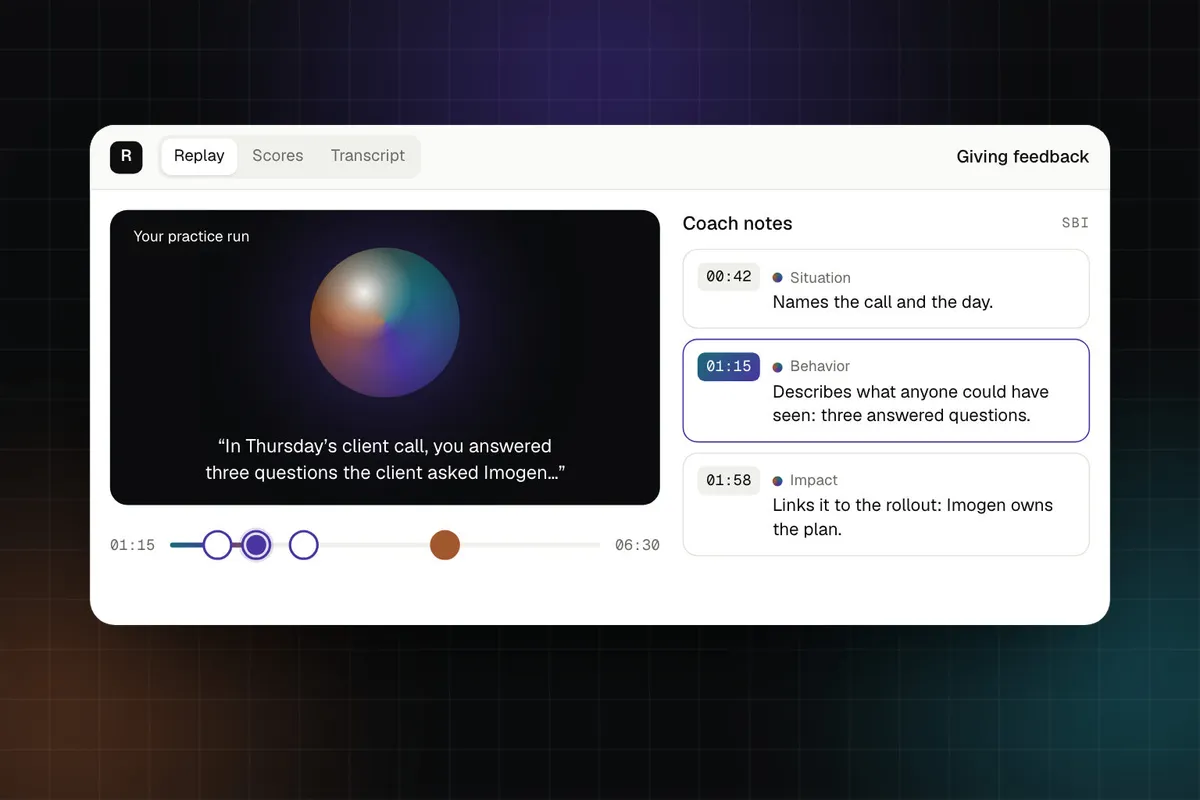
A comment in any of the three boxes is useful when the person can picture the moment you mean. The Situation-Behavior-Impact (SBI) model from the Center for Creative Leadership is a simple way to get there2:
- Situation: when and where it happened. “In Monday’s planning meeting…”
- Behavior: what the person did that you could see or hear. “…you agreed to all four new requests…”
- Impact: what it led to. “…and two of them slipped to the next sprint.”
In a face-to-face conversation, CCL adds a fourth step: asking about the person’s intent. A written 360 comment can’t ask, so describe what you saw and don’t guess at the reasons.
Three more rules cover most of the rest:
- Behavior, not a trait. “Be more proactive” describes the person. “Flag a risk when you see it, not on the due date” describes an action they can take.
- One idea per line. If a box has three points, write three lines. A comment that mixes them is hard to act on and easy to dismiss.
- An empty box is an answer. If you have nothing for Stop, don’t invent something to fill the form. Write “Nothing I’ve seen” and put your effort into the boxes where you have an example.
“Stop being so negative in meetings.”
“Stop opening with the risks when someone pitches an idea. In the last two roadmap reviews, the first reply to each proposal was why it would fail, and the newer people stopped suggesting things.”
360 feedback start, stop, continue examples for a peer
A peer sees how someone works with others: how they share information, keep promises across teams and hand work over. Stick to that. Comments on strategy or management style are better left to the people who see them.
| Area | Start | Stop | Continue |
|---|---|---|---|
| Working together | “Looping in the design team before the spec is final. On the checkout project their comments came after sign-off and cost us a week of rework.” | “Answering cross-team questions in private messages. The answers never reach the shared channel, so the same question comes up again.” | “Offering to pair when someone is stuck. When I couldn’t get the test data to load, you spent 20 minutes with me and I was unblocked the same day.” |
| Deadlines | “Telling us as soon as a date is at risk. On the last release we heard about the delay on the due date, and QA had no time to re-plan.” | “Agreeing to dates in the meeting and checking your capacity afterward. Twice this quarter the date moved the next day.” | “Breaking big tasks into dated steps in the tracker. I always know where your part stands without having to ask.” |
| Meetings | “Sending the decision you need before the meeting. When the invite just says ‘sync’, we spend the first half working out the question.” | “Reopening settled points in the last ten minutes. In the last two planning sessions it pushed the next steps out of the meeting.” | “Summing up who does what before we hang up. It is why the actions from our weekly sync actually get done.” |
| Handoffs | “Writing a short note when a ticket changes hands: what is done, what is open and who to ask.” | “Handing over work on Friday afternoon without a call. On Monday the next person spends the morning piecing it together.” | “Recording a two-minute walkthrough for complex changes. People still use them weeks later.” |
Start, stop, continue examples for your manager
Upward feedback is often the hardest box to fill honestly. It is also where your manager learns what they can’t see from their own seat: how their priorities, feedback and delegation land on the team. The Continue column matters as much as the other two. Specific positive feedback on leadership tells a manager which habits to keep when everything else changes.
| Area | Start | Stop | Continue |
|---|---|---|---|
| Priorities | “Telling us what to drop when a new priority comes in. In March the partner integration was added to the roadmap and nothing came off it.” | “Changing the sprint goal in a chat thread. Half the team finds out a day later.” | “Explaining the reasons behind the quarter’s goals. Since the planning session where you walked us through the customer data, I know which work matters most.” |
| Feedback | “Telling me soon after something I did missed the mark. I heard about the client report two months later, in my review.” | “Commenting on individual work in the team channel. A short private message would land better.” | “Naming exactly what worked. After the board demo you told me which slide answered the finance director’s question, and I’ve used that structure since.” |
| Delegation | “Delegating the decision along with the task. On the vendor review I did the analysis, the choice went back to you, and the vendor waited a week.” | “Rewriting documents after handing them over without saying what changed. I can’t learn from edits I don’t see.” | “Giving me ownership of the onboarding program and backing my decisions in front of the leadership team.” |
| Support | “Keeping our one-to-ones in busy weeks. Three in a row were canceled during the launch, when I needed them most.” | “Answering a blocker with ‘let’s discuss later’ and no time. Later often doesn’t come.” | “Protecting the team from last-minute requests. When sales asked for a weekend fix, you agreed on a Tuesday date with them and explained it yourself.” |
To be honest without risking the relationship, write about decisions and habits, not personality, and write only what you would be willing to say in a one-to-one. If the team is small, keep the behavior and leave out details that point to you alone.
Start, stop, continue examples for a direct report
As a manager, you see both the results of someone’s work and how they work with the team. A written 360 comment is something they will reread, so hold it to the same standard as a performance review: specific, fair and about the work.
| Area | Start | Stop | Continue |
|---|---|---|---|
| Quality of work | “Running the checklist before client reports go out. Two of the last five had numbers that didn’t match the dashboard.” | “Moving tasks to done before they are reviewed. Four of last month’s twelve came back with fixes.” | “Writing down the assumptions behind each forecast. When the third-quarter numbers moved, we could see why in five minutes.” |
| Initiative | “Bringing a first option along with the problem. You spot issues early. The next step is suggesting how to fix them.” | “Waiting for me to assign the next task when your queue is clear. Take the top item from the backlog and let me know.” | “Picking up the churn question nobody owned. Your analysis is now part of the monthly review.” |
| Communication with the team | “Sharing progress at stand-up, not only blockers. The team doesn’t see how much of the migration you have already done.” | “Cutting in when someone disagrees in design reviews. Twice last month the discussion ended before the other person had finished.” | “Explaining technical trade-offs in plain words for the sales team. They come to the right person with their questions now.” |
A Stop comment like cutting people off should not be news when the 360 report arrives. Raise it in person first. Here is how to raise a hard point face to face. For the everyday points that don’t need to wait for a 360 at all, use this sample wording for feedback you give out loud.
Strengths and weaknesses, written as start, stop, continue
Many 360 forms ask for strengths and weaknesses instead. The same thinking works there. A strength becomes a Continue: name the behavior behind it. A weakness splits in two: what to stop, and what to start doing instead.
| On the form | Written as start, stop, continue |
|---|---|
| Strength: “Great communicator” | Continue: “Sending a one-paragraph summary after each client call. Everyone knows what was agreed without reading the notes.” |
| Strength: “Very reliable” | Continue: “Flagging a slip as soon as you see it. I can plan around a late date. I can’t plan around a surprise.” |
| Strength: “Strong technical skills” | Continue: “Reviewing pull requests within a day and explaining the reason in comments. New engineers learn the codebase from them.” |
| Weakness: “Poor time management” | Stop: “Taking on side requests during release week.” Start: “Asking me which task should move when a new one comes in.” |
| Weakness: “Not a team player” | Stop: “Making design decisions alone and announcing them in the channel.” Start: “Sharing a draft with the two people it affects before it is final.” |
| Weakness: “Too quiet in meetings” | Stop: “Raising concerns after the decision is made.” Start: “Giving your view in the first round. The points you sent in chat after the last two meetings were some of the best ideas.” |
Using start, stop, continue with a team
The same three questions work for a team retrospective at the end of a project or a quarter.
- Give everyone five minutes to write their own Start, Stop and Continue notes before anyone speaks.
- Group similar notes and read them out without names.
- Vote on one Start and one Stop the team will act on, with an owner and a date for each.
- Open the next retrospective by checking them.
Keep it about how the team works. Feedback about one person belongs in a 360 or a one-to-one, not in front of the team.
Turning start, stop, continue feedback into a development plan
A 360 report with a dozen comments in each box is not a plan yet. Narrow it down:
- Pick one or two points from Start and Stop. Choose the ones that came up from more than one rater, or that matter most for the role.
- Find where they will show up next. The Monday planning meeting, the next client report, the next one-to-one.
- Agree on how to practice and when to check. Put a review date in the calendar with your manager, four to six weeks out.
Continue items don’t need a plan, but say them out loud, so the person knows what to keep doing while they work on the rest.
Many Start and Stop points are really about a conversation: pushing back on a date, giving a peer critical feedback, handing over a decision. Those are hard to practice on the job, because the real conversation happens once. You can rehearse the conversation your feedback points to with an AI character first, then have the real one.
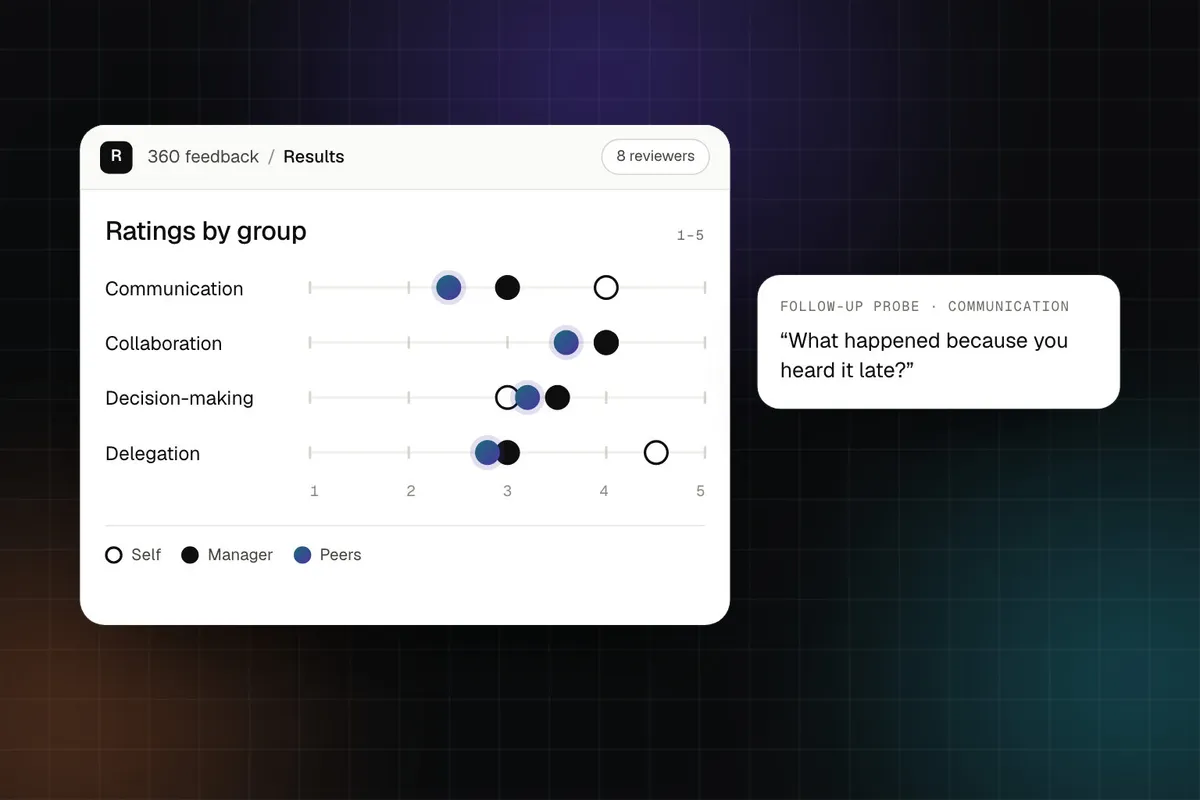
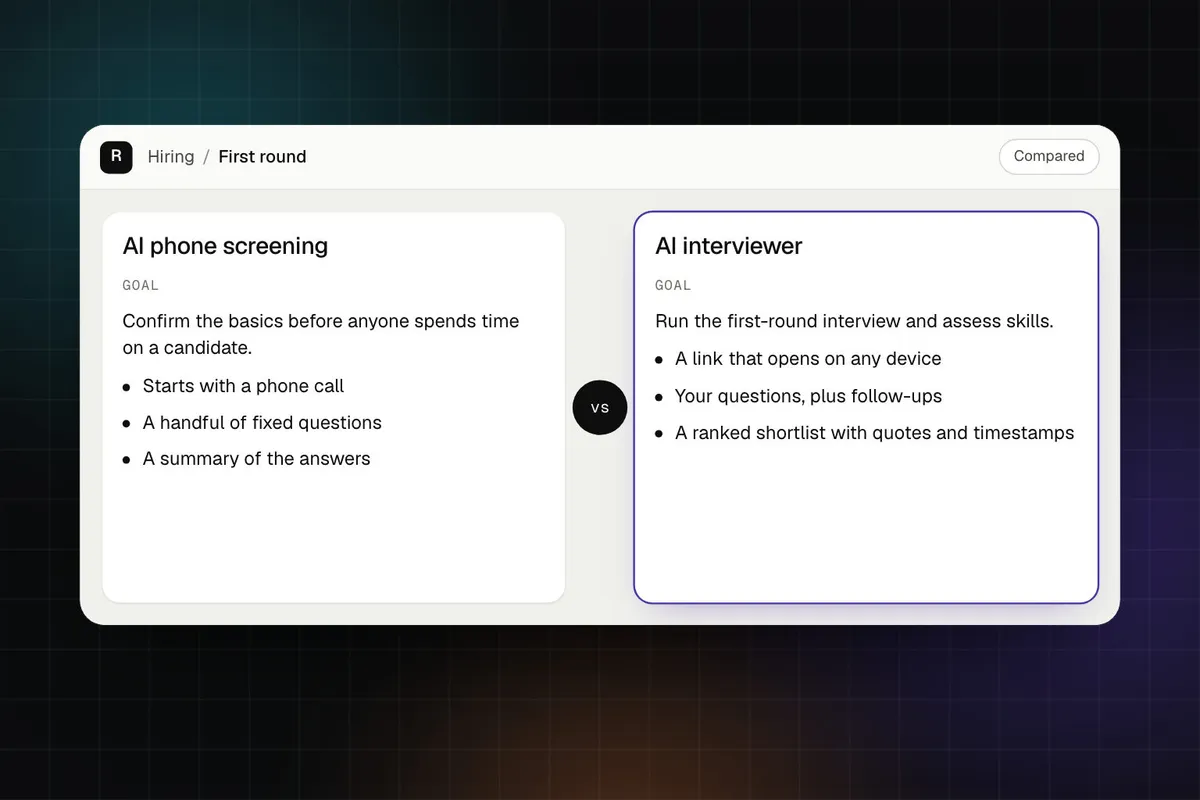
On The Reflection, reviewers give 360 feedback in a conversation with an AI interviewer that asks follow-up questions for real examples. On recurring programs, development plans are linked to AI roleplay scenarios, so a growth area from the report comes with a conversation to practice. See 360 reviews with development plans built in.
The comments that end up in a development plan look alike: a named meeting, one behavior, one consequence. “Stop agreeing to dates before you check capacity; the release moved twice this quarter” gives a manager something to work on by Monday. The useless ones look alike too: “be more strategic,” “great team player,” “keep it up.” Nobody can disagree with them, and nobody can act on them. The step most teams skip is turning a specific Stop into a conversation to rehearse. Pushing back on a date is a skill, and it improves fastest when you practice that exact exchange with an AI character before the next planning meeting.
Questions people ask about start, stop, continue
What are some good collaboration skills?
In a 360, collaboration is what peers can see: sharing information where others can find it, flagging problems early, keeping commitments to other teams, handing over work so someone else can pick it up, and hearing out a different view before deciding. The examples for a peer turn each of these into a start, stop or continue comment.
How many comments should go in each box?
One to three. Two specific comments are more useful than six general ones, and a long list makes it harder for the person to see which point matters most.
Sources
- Alice Hoon, Emily Oliver, Kasia Szpakowska and Philip Newton. Use of the ‘Stop, Start, Continue’ method is associated with the production of constructive qualitative feedback by students in higher education. Assessment & Evaluation in Higher Education, 40(5), 755–767, 2015.
- Center for Creative Leadership. Use Situation-Behavior-Impact (SBI)™ To Understand Intent.