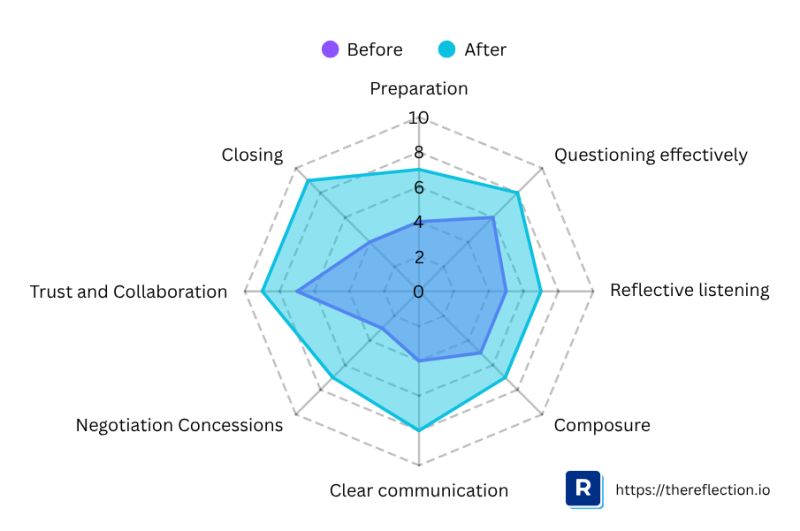


Why does so much professional development fail after the course ends?
It’s the classic L&D paradox: a team finishes a world-class workshop, feels inspired, but a month later, they are back to their old habits. Research suggests that only 10–20% of training actually translates into behavior change at work.
The problem isn’t that the training is bad. The problem is that most programs stop right when the real learning should begin.
Understanding the Cycle
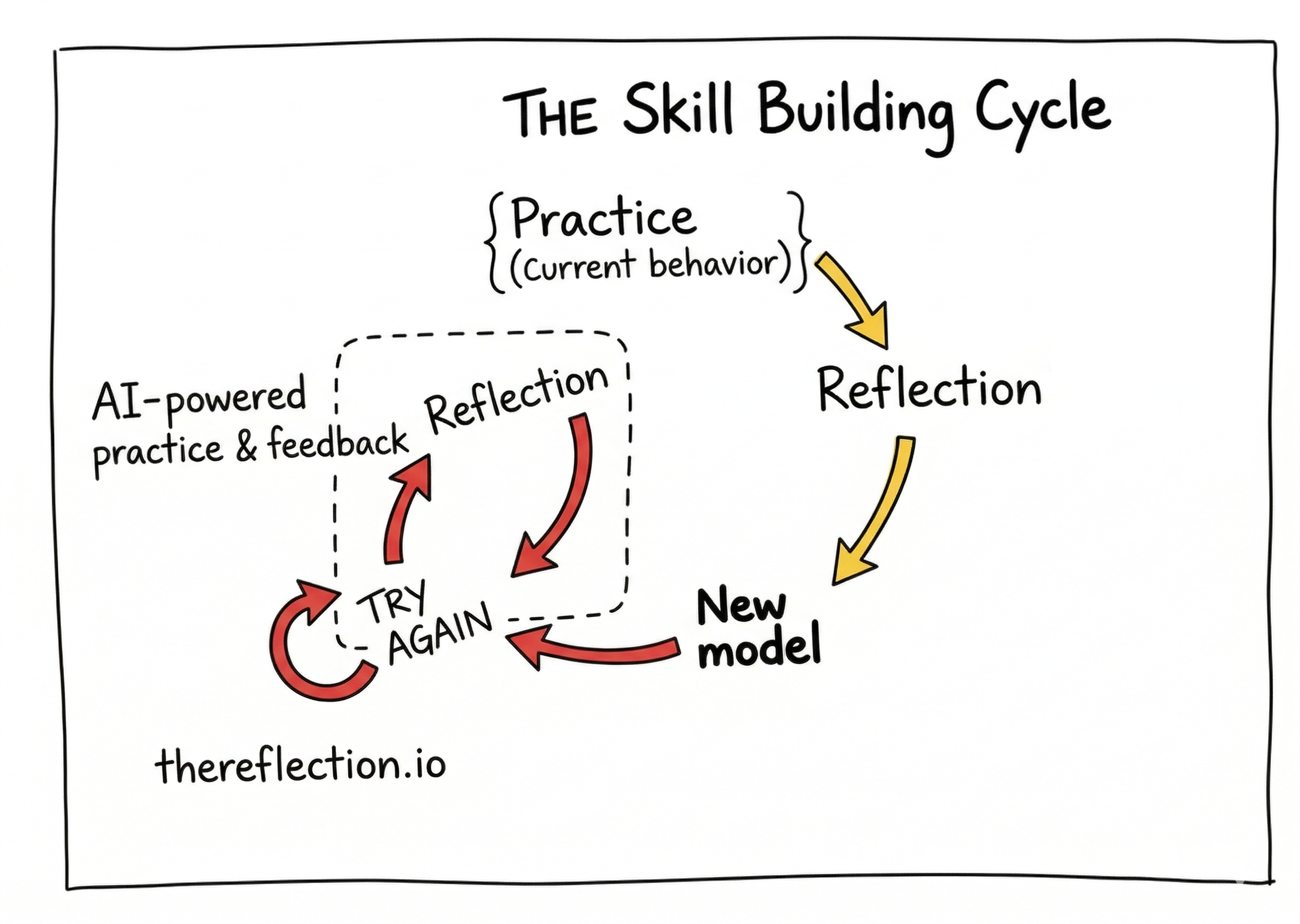
At thereflection.io, we view growth through the lens of The Skill Building Cycle. To move from "knowing" to "doing," an individual must pass through several stages:
- Practice (Current Behavior): Identifying how you naturally respond to a challenge.
- Reflection: Analyzing the gaps between your current performance and the goal.
- New Model: Introducing the better way to handle the situation.
- Try Again: The most critical stage — testing the new model in a safe environment.
The "Try Again" Gap
In a traditional training room, there is usually time for only one or two practice cycles. But changing deep-seated workplace behaviors requires dozens of repetitions with consistent feedback.

Until recently, giving every employee enough personalized practice was impossible to scale. You simply couldn't provide a human coach for every single repetition.
How AI Completes the Cycle
This is where AI changes the game for behavior change. By integrating AI-powered feedback into the workflow, we can finally close the gap between theory and habit.
- Unlimited Practice Cycles: Employees can "Try Again" as many times as they need without judgment.
- Real-Work Scenarios: Personalized simulations based on actual team challenges.
- Instant Feedback: Moving from reflection to the "New Model" in seconds, not weeks.
Stop Teaching, Start Practicing
If you want to see a real ROI on your training budget, stop focusing on the volume of content and start focusing on the frequency of practice. The Reflection helps teams bridge this gap through realistic AI scenarios and guided feedback, turning new skills into permanent habits.