
How it's different
A 1-to-5 scale tells you a score. It doesn't tell you why, or what to actually do about it.
| AI-interview 360 | Classic survey 360 | |
|---|---|---|
| How feedback is given | A real conversation with an AI interviewer | Rating scales and multiple-choice questions |
| Depth | Follow-up questions dig for specific examples | A number, sometimes with an optional comment box |
| Time to complete | One natural conversation per relationship | A long form repeated for every rater |
| What the report shows | Themes, evidence, and concrete next steps | Averages and a bar chart |
| Anonymity | Every response is anonymized before it's ever seen | Comments can sometimes be traced back to the writer |
How it works
Most programs run 2–4 weeks start to finish — and most of that time goes to reviewers having their conversations, not to setup.
1
You send us the reviewer map — who rates whom: peers, direct reports, managers, colleagues from other teams. We agree the competency model together, yours or one we tailor to your industry, and sign off on what the final reports should look like before anything launches.
2
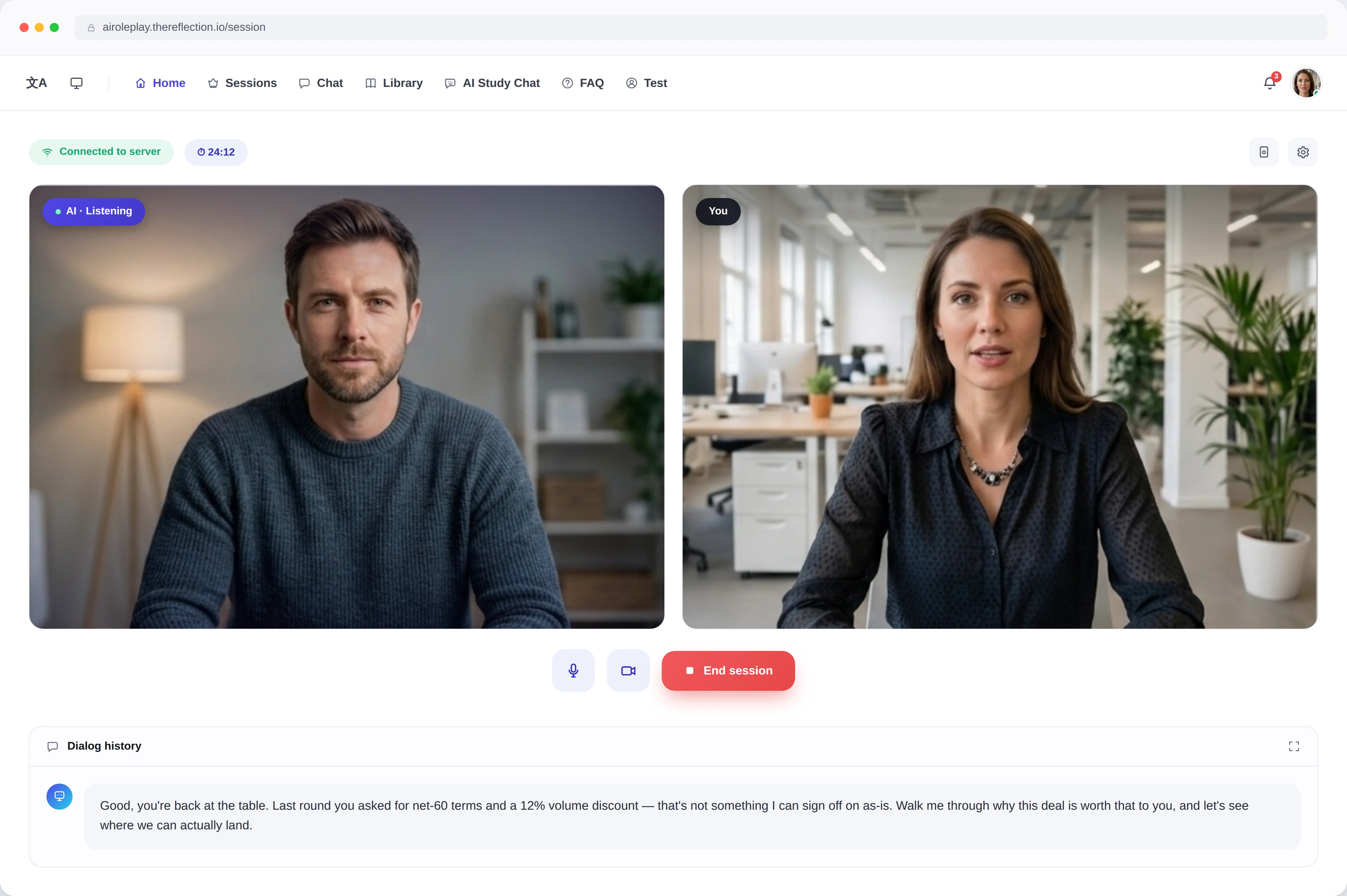
Each reviewer gets a personal link by email for every colleague they're rating — "Give feedback on Sarah Chen" — and has a spoken, 5–10 minute conversation with the AI about that person. The AI asks the questions your competency model calls for, then follows up and asks for examples wherever the answer is vague.
3
Once collection closes, every response is processed and anonymized, and each person gets an individual report:
Who sees what
A private report with concrete strengths, growth areas, and next steps — not just a score to interpret alone.
The same report, so coaching conversations start from evidence instead of a manager's own impression.
A company-wide summary of the patterns showing up across teams — to see where to invest in development, not just who scored well.
Questions
360° feedback is a review method where an employee is assessed not just by their manager, but by several people around them — peers, direct reports, managers, and sometimes colleagues from other teams — to build a more complete picture than any single viewpoint could give.
Instead of filling out a rating scale, each reviewer has a spoken conversation with an AI about their colleague. The AI asks follow-up questions and asks for real examples, so the feedback captures nuance and reasoning that a 1-to-5 scale can't hold.
Behavioural and managerial competencies and real-world effectiveness — how someone makes decisions, communicates, and handles difficult situations — rather than technical knowledge. It's an outside view of how a person actually shows up at work, not a knowledge test.
The AI asks about the level a competency is showing up at, then digs into specific situations and examples rather than asking for a number upfront. If a reviewer does volunteer a rating, the AI probes it — asking why not higher, or for an example — so the conversation still resolves into a comparable, trackable score per competency, even though it feels like an ordinary conversation to the person giving feedback.
Yes. Every conversation is anonymized and the original recording is discarded after processing — no one at the company, including the person's manager, sees who said what. Even when several reviewers make a similar point, the wording is merged so no single comment can be traced back to its author.
A scored profile across every competency in the model, where the person stands relative to the company average, a Johari Window comparing how they see themselves against how others describe them, and concrete, actionable recommendations for each growth area — not just a number to interpret alone.
The person being reviewed and their manager both get the individual report. It can be sent automatically once feedback collection closes, or handed to your HR team to distribute on their own schedule. A company-wide summary report is also generated alongside the individual ones.
Usually under 10 minutes, though it varies with the competency model and how much detail the reviewer wants to share about their colleague.
A typical program runs 2–4 weeks end to end: 2–3 days to agree the reviewer map and competency model, 2–3 weeks for reviewers to complete their conversations, and up to 2 business days to process and deliver reports once collection closes.
Yes. Upload your existing model, or start from a ready-made set built for your industry and company stage, and adjust it to what you actually want the 360 to surface.
No. The same process works at any level — individual contributors get the same depth of feedback as managers, since the reviewer list and competency model are set per program, not fixed to seniority.
Book a short demo and we'll walk through a real conversation and the report it produces.
Book a Demo